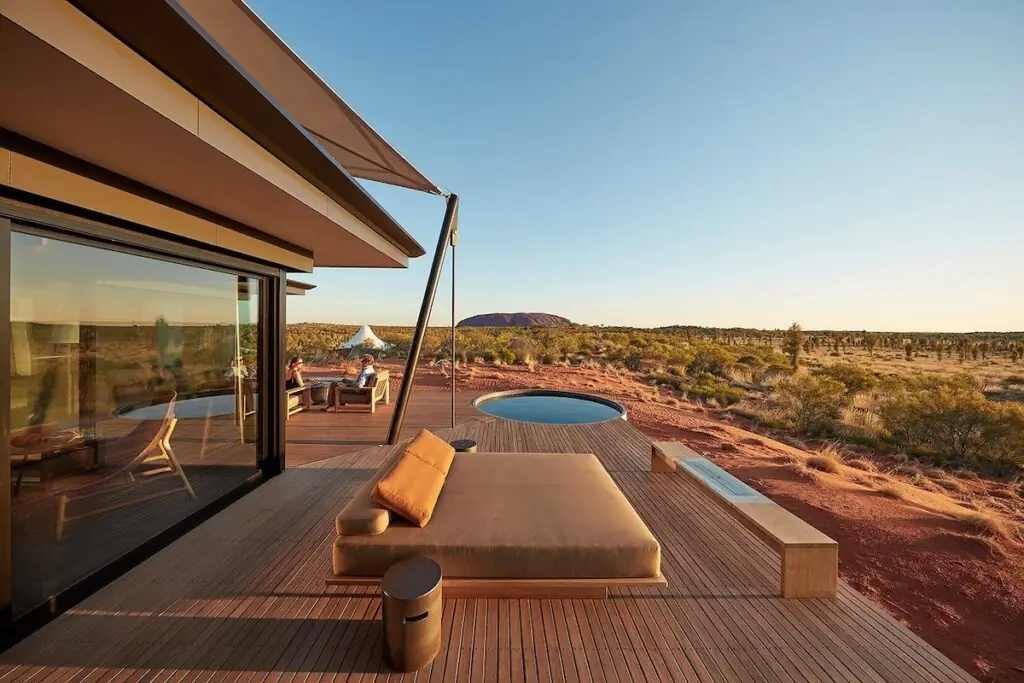
Iconic Desert Resorts USA: The Definitive Evaluation Guide
Arid destination hospitality within the United States operates at a demanding intersection of extreme thermal engineering, scarce municipal water rights, specialized desert ecology, and high-yield asset management. Unlike coastal properties built around marine seawalls or mountain lodges tethered to seasonal snowpack leases, premier desert resorts must negotiate severe diurnal temperature swings, intense solar radiation, monsoon flash-flood corridors, and delicate xeriscape ecosystems. From the red-rock canyonlands of southern Utah and the saguaro-studded bajadas of the Sonoran Desert to the midcentury architectural enclaves of the Coachella Valley and the high-desert mesas of northern New Mexico, iconic desert resorts in the USA represent a distinct architectural and operational class.
Evaluating high-performing desert properties requires looking past glossy sunset photography, infinity-edge pool renderings, and subjective travel magazine rankings. A resort’s actual operational viability depends on how its architectural orientation mitigates afternoon solar heat gain, how its hydraulic infrastructure balances water conservation with guest expectations for pools and spas, how its trail networks manage backcountry heat safety, and how its revenue management system handles extreme seasonal demand compression. When summer daytime temperatures exceed 110°F across low-elevation desert basins or when high-desert elevations experience sudden winter freezes, the operational divide between climate-engineered sanctuaries and superficial desert hotels becomes unmistakable.
Understanding these mechanical intersections is critical for travel directors, corporate retreat planners, and analytical travelers seeking structural clarity in arid-environment travel. What appears in promotional literature as effortless desert serenity often conceals complex thermal comfort engineering, unbundled resort and spa tariffs, strict nocturnal dark-sky covenants, and remote transfer logistics.
Understanding “iconic desert resorts USA.”
Evaluating the market of iconic desert resorts in the USA requires separating romanticized frontier imagery from measurable architectural and operational performance. Mainstream travel writing routinely conflates any luxury hotel located in Arizona, Utah, or Southern California with a true desert sanctuary, blurring the boundary between suburban golf-course sprawl and authentic arid-landscape immersion. Assessing premier desert destinations demands evaluating thermal envelope engineering, spatial key density per acre, water stewardship infrastructure, and total cost of stay metrics across distinct desert biomes.
Systematically auditing desert resort performance requires analyzing three core structural layers:
-
Thermal Orientation and Architectural Envelope: Evaluating solar exposure (west-facing glass walls without deep overhangs turn suites into greenhouses by 4:00 PM), passive cooling courtyards, HVAC acoustic quietness under peak load, and heated pool/plunge temperature regulation during cold desert nights.
-
Spatial Seclusion and Dark-Sky Sovereignty: Assessing physical key density per acre, visual sightlines free from suburban highway or golf-cart traffic, and compliance with strict dark-sky exterior lighting standards that preserve nocturnal stargazing clarity.
-
Commercial Positioning and Seasonal Rate Compression: Examining how property management systems handle extreme seasonal demand swings where winter and spring tariffs soar by 150 to 300 percent over midsummer lows alongside unbundled resort fees, spa surcharges, and guided excursion pricing.
A pervasive mistake in arid-environment trip planning is treating all four major North American desert biomes the Sonoran, Mojave, Great Basin, and Chihuahuan deserts as interchangeable hot-weather destinations. A property situated at 1,100 feet elevation in the Sonoran Desert (such as Scottsdale or Tucson) operates on an entirely different thermal calendar than a high-desert sanctuary at 7,000 feet in northern New Mexico (such as Santa Fe) or a canyon-country retreat at 4,200 feet on the Colorado Plateau (such as southern Utah or Sedona).
Deep Contextual Background: Railroad Sanatoriums, Midcentury Modernism, and Arid Isolation
The architecture of American desert hospitality evolved through distinct medical, transportation, architectural, and ecological phases over the past century. In the late nineteenth and early twentieth centuries, the earliest desert retreats in Tucson, Phoenix, and Palm Springs emerged as dry-air health sanitariums and winter railway resorts. Wealthy Easterners traveled west via Southern Pacific and Santa Fe rail lines to escape harsh northern winters, staying in sprawling Spanish Colonial Revival and Pueblo Revival estates—such as the Arizona Biltmore (opened in 1929 with architectural consulting by Frank Lloyd Wright) and Castle Hot Springs—that prioritized shaded loggias, thick adobe walls, and natural thermal mineral waters.
Following World War II, the proliferation of residential air conditioning, commercial aviation, and interstate highways transformed the desert Southwest into a major winter leisure and golf corridor. During the 1950s and 1960s, Palm Springs and Scottsdale became laboratories for Desert Modernism, where architects like Richard Neutra, Albert Frey, and William Krisel designed low-slung glass-and-steel pavilions that blurred indoor and outdoor living around backyard swimming pools. Concurrently, large-scale resort developers constructed sprawling, turf-heavy golf resorts across the Coachella Valley and Paradise Valley, relying heavily on Colorado River water allocations.
In the 1980s and 1990s, destination wellness pioneers recognized the psychological power of desert silence and vast horizontal vistas. Properties like Canyon Ranch and Miraval in Tucson, alongside Enchantment Resort and Mii amo in Sedona’s Boynton Canyon, shifted the focus from manicured golf fairways toward red-rock trail immersion, indigenous botanical spa therapies, and mindfulness programming.
Conceptual Frameworks and Mental Models for Desert Asset Evaluation
Objective comparison of premier American desert resorts requires analytical mental models that look past promotional sunset imagery to isolate true thermal comfort, ecological authenticity, and net financial value.
1. The Crepuscular Activity to Thermal Envelope Ratio (CATER)
This framework evaluates how well a desert resort supports peak outdoor engagement during dawn and dusk (“crepuscular” hours) while maintaining comfortable, visually connected indoor sanctuaries during peak midday solar radiation. High-CATER properties feature deep shaded terraces, private plunge pools with chiller/heater controls, west-facing sunset decks with motorized solar shades, and guided sunrise/night-sky programming.
2. The True Net Desert Stay Cost Metric (TNDSCM)
This model calculates the complete financial outlay of an arid-environment stay by combining baseline room tariffs, mandatory daily resort fees, valet parking charges, regional airport transfer costs (which can exceed $400 round-trip for remote Utah or New Mexico estates), guided canyon excursion fees, and spa service charges, minus bundled consortia or all-inclusive credits.
3. The Xeriscape Authenticity and Spatial Buffer Index (XASBI)
This metric measures how genuinely a property integrates into its native arid landscape versus relying on artificial turf lawns and high-density suburban layouts. High-XASBI resorts maintain wide native desert setbacks between casitas, preserve undisturbed saguaro or juniper habitats, and shield guest sightlines from neighboring subdivisions and golf carts.
Key Categories and Structural Variations in American Desert Resorts
Premier US desert destinations fall into distinct operational and architectural archetypes, each reflecting specific desert biomes, elevation profiles, and guest service models.
| Desert Resort Archetype | Primary Geographic Biomes | Architectural & Spatial Profile | Operational & Financial Model | Primary Operational Trade-Off / Vulnerability |
| Remote Canyonland Sanctuaries | Colorado Plateau (Southern Utah, Northern Arizona) | Minimalist concrete/stone pavilions; ultra-low-key density | Ultra-high baseline ADR; semi-inclusive or all-inclusive options | Long regional airport transfers; extreme summer heat and winter freezes |
| Red-Rock Canyon & Vortex Retreats | Sedona & Oak Creek Canyon (Arizona) | Casitas, landscape atrium suites, canyon-floor lodges | High seasonal ADR; strong spa and trail-guiding integration | Heavy gateway traffic in Sedona; strict trailhead parking limits |
| Sonoran Foothill & Wellness Estates | Tucson, Scottsdale & Paradise Valley (Arizona) | Adobe casitas, hillside villas, lush native cactus gardens | Unbundled European Plan or all-inclusive wellness models | Extreme June–August heat (105°F+); high winter/spring rate spikes |
| Coachella Valley Midcentury & Estate Enclaves | Palm Springs, Rancho Mirage & Indian Wells (California) | Desert Modernist pavilions, private gated estates, golf resorts | High winter/spring festival tariffs; deep summer discounts | Strong spring valley winds; urban/suburban proximity in valley floor |
| High-Desert Adobe & Mountain Haciendas | Santa Fe & Taos (New Mexico) | Pueblo Revival adobe casitas, piñon-juniper foothill acreage | Seasonal rate peaks (summer/fall); cultural and culinary focus | High altitude (7,000+ ft) acclimatization; cold winter nights |
| Thermal Spring & Historic Oasis Hideaways | Morristown (AZ), Death Valley (CA), Big Bend (TX) | Restored historic stone lodges, spring-fed soaking pools | All-inclusive boutique tariffs or national-park concession rates | Limited room inventory; remote supply chains; strict seasonal closures |
Exemplary American Desert Resort Profiles
Examining flagship properties across these categories illustrates how regional elevation, architectural philosophy, and operational scale shape the guest experience:
Amangiri & Camp Sarika (Canyon Point, Utah)
Set across 600 private acres of raw Colorado Plateau desert near the Utah-Arizona border, Amangiri remains the architectural benchmark for remote arid luxury in North America. Its 34 minimalist concrete suites and 10 canvas-topped pavilions at Camp Sarika wrap around dramatic sandstone mesas, featuring private plunge pools, sky terraces, and a 25,000-square-foot spa.
-
Strengths: Unmatched geological drama, absolute spatial isolation, private slot-canyon and via ferrata guiding, and seamless integration into the natural desert terrain.
-
Trade-Offs: Requires regional flights into Page, Arizona (25 minutes away) or multi-hour drives from Las Vegas or Flagstaff, with ultra-luxury nightly tariffs.
Enchantment Resort & Mii amo (Sedona, Arizona)
Tucked deep inside the towering red walls of Boynton Canyon in Sedona, Enchantment Resort pairs 218 southwestern casitas with direct trailhead access into Coconino National Forest. At the heart of the canyon sits Mii amo, an intimate 23-casita destination spa operating on all-inclusive multi-day wellness journeys.
-
Strengths: Dramatic 360-degree canyon-wall immersion, immediate trail access without driving into congested Sedona, and elite spa and trail-house programming.
-
Trade-Offs: Canyon walls block direct sunlight earlier in the afternoon than open-mesa properties, making winter afternoons brisk.
Sensei Porcupine Creek (Rancho Mirage, California)
Set on a 230-acre private gated estate against the Santa Rosa Mountains in the Coachella Valley, this ultra-exclusive 22-room sanctuary combines Sensei’s data-driven wellness coaching with private championship golf, tennis, and Nobu dining.
-
Strengths: Complete estate privacy with near-zero outside guest traffic, tailored movement and nutrition guidance, and immaculate desert landscaping.
-
Trade-Offs: Extremely limited room count requires booking far ahead, and summer desert temperatures limit midday outdoor golf or tennis.
Castle Hot Springs (Morristown, Arizona)
Accessible via a seven-mile graded dirt road in the Bradshaw Mountains northwest of Phoenix, this historic 1896 oasis centers around natural geothermally heated mineral springs cascading through three tiered stone pools. Its 30 standalone bungalows and cabins operate on an all-inclusive model featuring farm-to-table harvests from an on-site agricultural garden.
-
Strengths: Authentic natural hot springs, intimate 30-key scale, inclusive farm-driven culinary program, and secluded canyon setting.
-
Trade-Offs: Closes entirely during peak summer heat (typically June through September) and requires rugged vehicle transit along the final access road.
Sanctuary Camelback Mountain, A Gurney’s Resort & Spa (Paradise Valley, Arizona)
Cascading down the north slope of Camelback Mountain between Phoenix and Scottsdale, Sanctuary features 110 mountainside casitas and private estates overlooking Paradise Valley. The property anchors its appeal around an infinity-edge pool, Asian-inspired spa treatments, and dining at elements.
-
Strengths: Elevated mountainside views above urban Scottsdale, intimate casita layout, and strong culinary and spa execution.
-
Trade-Offs: Proximity to residential Paradise Valley neighborhoods means ambient suburban sights and sounds remain visible below the slope.
Bishop’s Lodge, Auberge Resorts Collection (Santa Fe, New Mexico)
Situated on 317 acres in the Sangre de Cristo foothills just minutes from historic downtown Santa Fe, this restored 1920s retreat blends high-desert piñon forest with adobe architecture, casitas, and bunkhouse accommodations.
-
Strengths: Cooler high-altitude summer climate compared to low-elevation deserts, deep cultural proximity to Santa Fe’s art and culinary scene, and equestrian/fly-fishing access.
-
Trade-Offs: At over 7,000 feet elevation, winter brings snow and freezing nights, while unacclimatized visitors may experience mild altitude fatigue.
Ambiente, A Landscape Hotel (Sedona, Arizona)
Engineered as North America’s first landscape hotel, Ambiente elevates 40 cube-shaped bronze-tinted glass “Atriums” on steel piers above untouched desert juniper and manzanita terrain in Sedona. Each unit features a private rooftop deck with a fire pit and daybed engineered for unobstructed dark-sky stargazing.
-
Strengths: Minimal environmental ground disturbance, extraordinary 360-degree red-rock and night-sky views from private rooftops, and adults-only tranquility.
-
Trade-Offs: Located near a main Sedona roadway corridor rather than deep backcountry, introducing minor distant traffic hum on windless nights.
The Ritz-Carlton, Dove Mountain (Marana, Arizona)
Nestled in the Tortolita Mountains north of Tucson, this 253-room resort sits amidst dense saguaro forests with 20+ miles of private hiking and mountain biking trails radiating directly from the property.
-
Strengths: Deep Sonoran Desert trail network, strong multi-generational pool and golf facilities, and quieter isolation than central Scottsdale.
-
Trade-Offs: Larger room inventory creates higher weekend pool and lobby activity compared to boutique 30-key retreats.
Realistic Decision Logic for Retreat Selection
Matching traveler priorities with desert biome characteristics prevents seasonal and spatial mismatches:
-
Seeking Architectural Isolation & Backcountry Canyon Adventure: Select Amangiri or Castle Hot Springs. Both properties cap room counts under 45 keys, eliminate suburban visual intrusion, and anchor stays around private canyon hiking, via ferrata routes, or thermal mineral soaking.
-
Targeting Winter Sun & Midcentury Design Culture: Choose Sensei Porcupine Creek, The Ritz-Carlton Rancho Mirage, or boutique Palm Springs modernist properties. Between November and April, the Coachella Valley delivers reliable 70°F–85°F daytime warmth alongside world-class golf and design heritage.
-
Escaping Summer Heat Without Leaving the Southwest: Deploy Bishop’s Lodge in Santa Fe or high-elevation Sedona properties. At 4,500 to 7,300 feet elevation, summer mornings and evenings remain crisp and comfortable long after Phoenix and Palm Springs exceed 110°F.
Detailed Real-World Scenarios and Operational Stress Testing
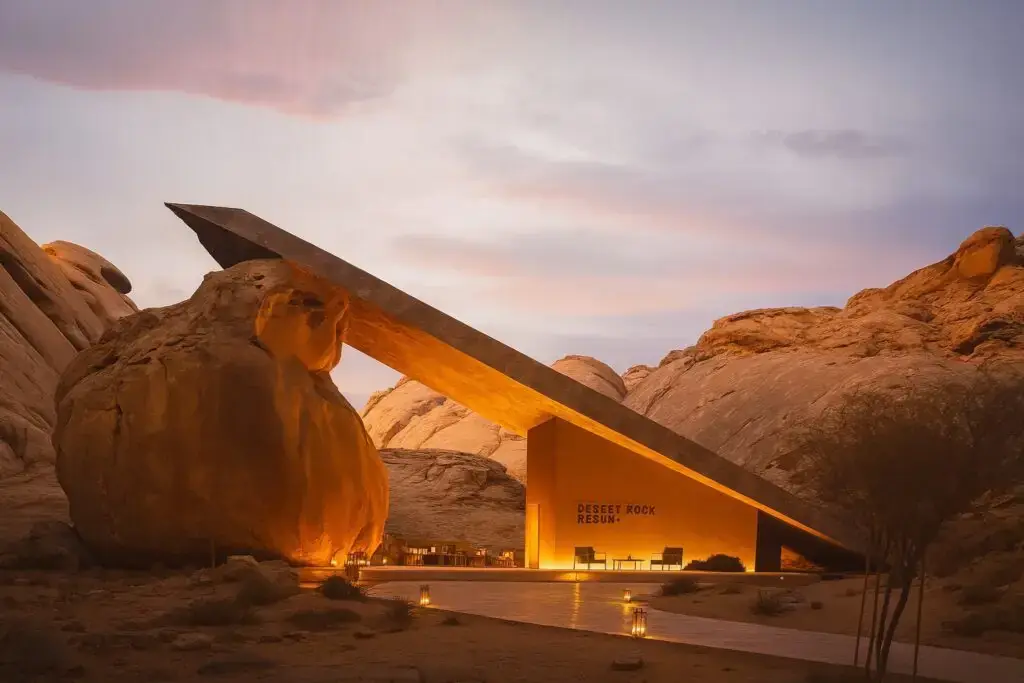
Examining how desert resort itineraries behave under environmental and logistical stress exposes critical planning vulnerabilities.
The Low-Elevation Summer Rate Trap
-
Constraints: Travelers book a June or July stay at a flagship Scottsdale or Palm Springs luxury resort to capture 55 percent off peak winter room rates.
-
Decision Points: Treating a low-elevation desert resort as an all-day outdoor pool and hiking destination during midsummer.
-
Failure Modes: Ambient daytime temperatures reach 112°F by 11:00 AM, pool water warms above 90°F unless actively chilled, and hiking trails close or pose severe heat-stroke risks after 8:30 AM.
-
Second-Order Effects: Guests remain confined indoors in air-conditioned spas and lounges for nine hours daily; summer stays succeed only when framed explicitly as indoor spa-and-culinary retreats paired with dawn/dusk outdoor windows.
Diurnal Temperature Swing Miscalculations in Spring and Autumn
-
Constraints: Guests pack strictly lightweight summer resort wear for a March trip to southern Utah or Sedona after seeing daytime high forecasts of 75°F.
-
Decision Points: Failing to account for rapid desert radiative cooling after sunset due to low atmospheric humidity.
-
Failure Modes: Once the sun drops behind canyon walls at 6:00 PM, temperatures plummet 35 to 40 degrees into the high 30s or low 40s.
-
Second-Order Effects: Outdoor star-gazing terraces, open-air dining decks, and walk-to-dinner pathways become uncomfortable without insulated layers, limiting enjoyment of the desert’s prime evening hours.
North American Monsoon Flash-Flood Disruption
-
Constraints: Travelers book an August slot-canyon hiking and outdoor adventure itinerary in southern Utah or Arizona.
-
Decision Points: Scheduling narrow canyon excursions during afternoon convective storm windows (July through early September).
-
Failure Modes: Localized monsoon thunderstorms miles upstream trigger sudden flash-flood warnings, forcing resort guides to cancel slot-canyon hikes and close unpaved access roads.
-
Second-Order Effects: Outdoor itineraries must pivot rapidly to indoor spa or elevated-ridge activities, requiring flexible scheduling and experienced local guiding teams.
Remote Airport Transfer Friction
-
Constraints: Travelers book a three-night stay at a remote canyonland or mountain-oasis resort without auditing regional airlift and ground transfer times.
-
Decision Points: Flying into a major hub airport four hours away rather than utilizing regional commuter flights or charter transfers.
-
Failure Modes: Eight to ten hours of total round-trip highway driving consume nearly a full day of a short three-night stay, while private resort car transfers add $600 to $1,200 to the folio.
-
Second-Order Effects: Short stays at isolated desert properties suffer severe time-to-transit inefficiency unless paired with regional airports or extended to four or five nights.
Planning, Cost, and Resource Dynamics
Evaluating desert resort expenditure requires accounting for extreme seasonal rate variance, mandatory facility fees, private guiding tariffs, and regional transfer outlays.
Direct vs. Indirect Cost Architecture
Headline nightly room rates represent only one component of arid-environment travel expenditure. Direct costs encompass baseline casita or suite tariffs and pre-booked all-inclusive meal plans. Indirect costs include mandatory daily resort fees ($50 to $95 per night at major Arizona and California properties), overnight valet parking ($40 to $65 per night), private hiking or via ferrata guide fees ($250 to $600 per half-day), spa service charges (20 to 24 percent), and private airport transfers.
Seasonal demand compression represents the single largest cost variable in desert hospitality: identical suites in Scottsdale, Tucson, or Rancho Mirage routinely command $1,400 per night in March while dropping to $450 per night in July.
| Cost Component | Low-Season Summer Value (Low Desert) | Peak-Season Luxury Resort (AZ / CA / NM) | Ultra-Luxury Remote Sanctuary (e.g., Amangiri) |
| Base Room / Casita Rate (Per Night) | $350 – $650 | $1,100 – $2,200 | $3,500 – $6,500+ (Meals often included) |
| Mandatory Resort & Valet Fees | $65 – $115 / night | $85 – $140 / night | Included in baseline tariff |
| Private Trail / Canyon Guiding | $150 – $300 / half-day (Dawn only) | $250 – $500 / half-day | $400 – $900+ / excursion |
| On-Property Dining & Drinks | $150 – $300 / person/day | $220 – $450 / person/day | Included (Alcohol/reserve wines extra) |
| Spa & Hydrotherapy Outlays | $250 – $450 / treatment | $300 – $600 / treatment | $350 – $750+ / treatment |
| Estimated Daily Couple Outlay | $850 – $1,550 / day | $1,850 – $3,600 / day | $4,200 – $7,800+ / day |
Tools, Strategies, and Technical Support Systems
Optimizing desert travel requires leveraging astronomical calendars, thermal microclimate data, and preferred consortia channels while recognizing their practical limits.
-
Lunar Phase & Dark-Sky Astronomical Calendars
-
Utility: Scheduling desert stays within five days of a New Moon maximizes Milky Way visibility and deep-sky stargazing from private rooftop decks and resort observatories.
-
Limits: Full moon phases wash out faint stars—though they illuminate red-rock canyon walls dramatically for night hiking.
-
-
Luxury Consortia Preferred Partner Channels
-
Utility: Booking properties such as Amangiri, Bishop’s Lodge, Sanctuary Camelback Mountain, or Ritz-Carlton Dove Mountain through accredited luxury advisors unlocks daily full breakfast, $100 to $200 property credits, and priority room upgrades at direct rates.
-
Limits: Cannot bypass multi-night minimum stay mandates during peak holiday or spring-training windows.
-
-
Elevation-Adjusted Microclimate Trackers
-
Utility: Comparing wet-bulb globe temperatures, UV index curves, and sunset times across specific resort elevations prevents scheduling midday outdoor activities during dangerous heat windows.
-
Limits: Localized canyon shade and desert wind gusts can shift perceived temperatures by 10 to 15 degrees from airport weather stations.
-
-
Chilled-Pool & Thermal-Plunge Verification
-
Utility: Confirming with resort engineering or concierge teams that outdoor pools are actively chilled below 82°F in summer—and heated above 84°F in winter—ensures year-round aquatic comfort.
-
Limits: Unheated natural canyon pools remain cold through spring.
-
-
Pre-Arrival Guide & Spa Lock Protocols
-
Utility: Reserving private hiking guides, via ferrata slots, and prime late-afternoon spa treatments 30 to 45 days ahead prevents sold-out bottlenecks during peak February–April demand.
-
Limits: Guided canyon excursions remain subject to real-time lightning and flash-flood safety holds.
-
-
Regional Commuter Air & FBO Charter Routing
-
Utility: Utilizing regional airports (such as Page, Flagstaff, Palm Springs, or Santa Fe Regional) cuts ground transfer times by up to 70 percent compared to major international hubs.
-
Limits: Smaller regional flights face higher seasonal cancellation sensitivity during high desert crosswinds.
-
Risk Landscape, Failure Modes, and Compounding Disruption
Arid destination travel carries distinct physiological, meteorological, and logistical risks that frequently compound when travelers underestimate desert extremes.
Taxonomy of Desert Resort Failure Modes
-
Exertional Heat Stress & Dehydration: Initiating strenuous canyon hikes after 9:00 AM in temperatures above 95°F without electrolyte loading, leading to heat exhaustion or medical evacuation.
-
Suburban Visual & Acoustic Intrusion: Booking an edge-of-property room at an urban-adjacent desert resort and facing highway traffic noise, golf-course maintenance mowers at 5:30 AM, or neighboring subdivision lights.
-
Flash-Flood & Unpaved Road Isolation: Heavy monsoon rains washing out rural gravel access roads or closing slot canyons mid-itinerary.
-
Particulate Dust & Respiratory Irritation: Spring desert windstorms (“haboobs” or high valley winds) carrying fine dust across open-air terraces and unsealed casita thresholds.
Compounding failure cascades often begin when unacclimatized visitors fly into a low-desert hub, skip afternoon hydration, book a midday trail hike, and return exhausted to a west-facing suite whose air conditioning struggles against peak afternoon sun.
Governance, Maintenance, and Pre-Arrival Verification Protocols
Minimizing environmental friction and securing optimal casita placement requires executing a structured pre-arrival verification workflow prior to departure.
Pre-Arrival Desert Trip Audit Checklist
Execute these verification steps 30 to 10 days before departure to protect comfort and schedules:
-
Casita Orientation & Sightline Lock: Request a standalone casita or suite oriented away from main driveways, golf-cart paths, and maintenance yards, prioritizing unobstructed desert or canyon horizon views.
-
HVAC & Night-Sky Lighting Check: Verify that the accommodation features quiet, individually zoned climate control and exterior dark-sky lighting switches so outdoor terrace lights can be fully extinguished for stargazing.
-
Dawn/Dusk Activity Scheduling: Book guided hikes, desert e-bike tours, and tennis courts for early morning (6:30 AM to 9:00 AM) slots, reserving midday hours for spa hydrotherapy, shaded cabanas, and culinary dining.
-
Transfer & Road Condition Audit: For remote retreats (such as Castle Hot Springs or Utah canyonlands), confirm ground transfer logistics and whether standard rental vehicles are permitted on final unpaved access roads.
Measurement, Tracking, and Evaluation Frameworks
Assessing the true quality of a desert resort stay requires tracking both financial transparency and environmental-experiential metrics.
Quantitative vs. Qualitative Evaluation Matrix
-
Quantitative Metrics: True All-In Cost Per Stay Night, Transit-to-Stay Time Ratio (round-trip ground transfer hours divided by total stay hours), Crepuscular Outdoor Utilization Hours, and Ancillary Fee Ratio.
-
Qualitative Signals: Nocturnal Dark-Sky Clarity, Architectural Thermal Comfort During Peak Afternoon Heat, Acoustic Silence Across Casita Terraces, and Guide Ecological Expertise.
-
Leading vs. Lagging Indicators: New-moon date alignment, dawn-focused activity scheduling, and verified perimeter casita placement serve as leading indicators of success. Post-trip folio reconciliation and physical energy restoration represent lagging indicators of execution quality.
Common Misconceptions and Structural Oversimplifications
Mainstream travel writing frequently perpetuates oversimplifications regarding American desert resorts that lead to seasonal and spatial misjudgments.
- Myth 1: All Desert Resorts Are Warm Year-Round Winter Sun Escapes
-
Correction: High-desert resorts in Santa Fe, Taos, northern Arizona, and southern Utah sit between 4,200 and 7,300 feet elevation, experiencing freezing winter nights, snowstorms, and brisk daytime highs in the 40s and 50s between December and February.
- Myth 2: True Luxury Desert Resorts Always Feature Lush Green Golf Lawns and Palm Groves
-
Correction: Maintaining non-native Kentucky bluegrass fairways and tropical palm groves in arid basins requires massive water extraction. Contemporary architectural icons like Amangiri and Ambiente embrace native xeriscape rock, sand, and drought-adapted flora as a superior aesthetic and ecological standard.
- Myth 3: Desert Nights Are Always Warm Enough for Sleeveless Outdoor Dining
-
Correction: Because desert air holds virtually no moisture to trap daytime heat, temperatures routinely drop 30 to 45 degrees after sunset, requiring sweaters or jackets on outdoor terraces from October through April.
- Myth 4: Remote Desert Isolation Means Sacrificing Culinary Quality
-
Correction: Leading isolated desert properties operate sophisticated cold-chain logistics alongside on-site hydroponic and biodynamic desert farms such as Castle Hot Springs’ agricultural gardens and Sensei’s Nobu culinary program delivering world-class dining miles from urban centers.
Ethical, Environmental, and Regional Economic Considerations
Operating luxury hospitality infrastructure in water-scarce arid ecosystems carries profound environmental and cultural responsibilities.
Hydraulic Stewardship and Water-Table Conservation
Freshwater scarcity defines long-term viability across the Colorado River Basin and the Sonoran and Mojave deserts. Responsible luxury operators replace decorative turf with native xeriscape landscaping, capture greywater for subsurface irrigation, utilize high-efficiency closed-loop pool filtration, and eliminate single-use plastic water bottles in favor of on-site mineralization and refill stations.
Dark-Sky Preservation and Indigenous Cultural Respect
Artificial light spill disrupts nocturnal desert wildlife and degrades astronomical visibility across the American Southwest. Leading properties adhere to International Dark-Sky Association lighting standards using shielded, warm-spectrum downward fixtures while partnering respectfully with local Indigenous communities and artisans to honor ancestral lands and regional craft traditions.
Strategic Conclusion and Operational Synthesis
Evaluating iconic desert resorts in the USA effectively requires looking past sunset marketing photography, poolside clichés, and generic regional rankings. Achieving genuine desert immersion, thermal comfort, nocturnal clarity, and financial predictability demands an analytical approach grounded in evaluating elevation-specific microclimates, architectural solar envelopes, spatial key density, and total unbundled trip costs.
By applying structured evaluation frameworks such as the Crepuscular Activity to Thermal Envelope Ratio, the True Net Desert Stay Cost Metric, and the Xeriscape Authenticity and Spatial Buffer Index, travelers and trip planners can align seasonal timing and property architecture with their exact expectations. Combining lunar-aware scheduling with pre-arrival casita orientation checks and dawn-focused outdoor planning ensures a restorative, transparent, and deeply memorable arid-landscape journey.